Everything under one roof

Five zones. Explained plainly.

What each experience is, what it feels like, and how we plan to run it. Tap a zone to jump straight to it. The detail on evidence and safety is there when you want it.

01

Train

Get stronger, move better.

Gym floor

Strength and conditioning kit for training on your own or with a coach.

Killerbellz

Kettlebell circuits in small groups, guided by former pro boxer Ruben Giles. Meet Killerbellz →

Pravilo

Held in soft cuffs and stretched through the whole body by a trained guide. All about Pravilo →

02

Heat & Cold

Warm right through, then wide awake.

Infrared sauna

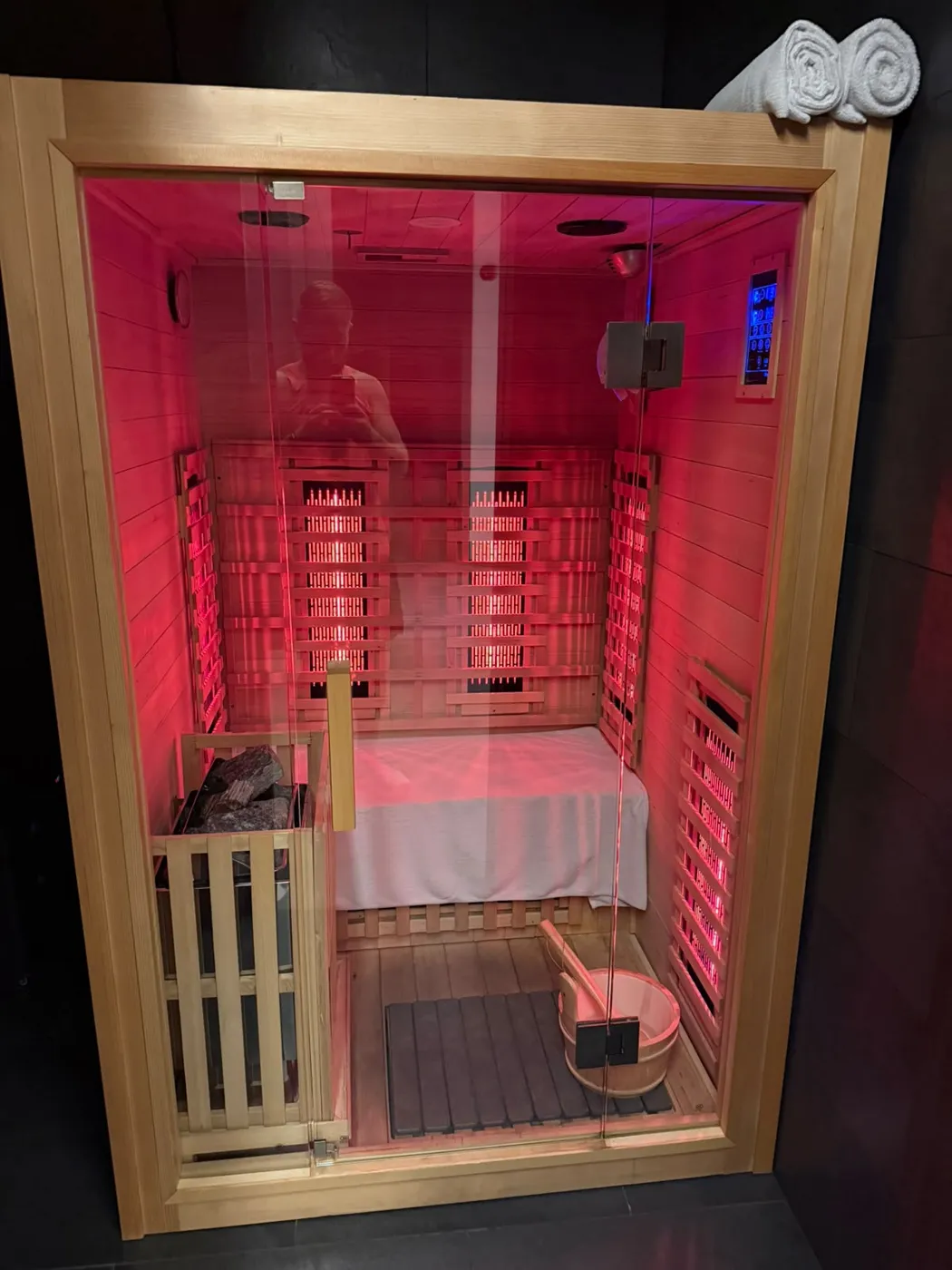
A two-person infrared sauna cabin glowing red.
Tried by Bobby, and part of his routine from the start.

What it is

A traditional Finnish sauna heats the air, often over hot stones with water thrown on for steam, and the hot air warms you. An infrared sauna uses infrared panels to warm your body directly, so the air itself stays cooler: roughly 45–60°C, against 65–90°C in a traditional sauna.

What it feels like

A gentler, more even warmth that many people find easier to stay in, though you still sweat properly. First sessions are usually short, around 10 to 15 minutes, building up over time and rarely beyond 30.

What the evidence says

Long-running Finnish studies link regular (traditional) sauna use with good long-term heart health, but they are observational: they show a link, not cause and effect. For infrared saunas specifically, and for popular claims about sweating out toxins, weight or skin, the evidence is limited. Sweating is not how the body removes toxins; your liver and kidneys do that. We offer the sauna for what it is: deep warmth and a quiet place to switch off.

How we plan to run it

Water before and after, no alcohol, and a simple health question beforehand. Anyone with a heart condition, blood pressure problems or who is pregnant should check with their doctor first. We plan to offer both infrared and traditional saunas.
Sources

Cold plunge and cryotherapy

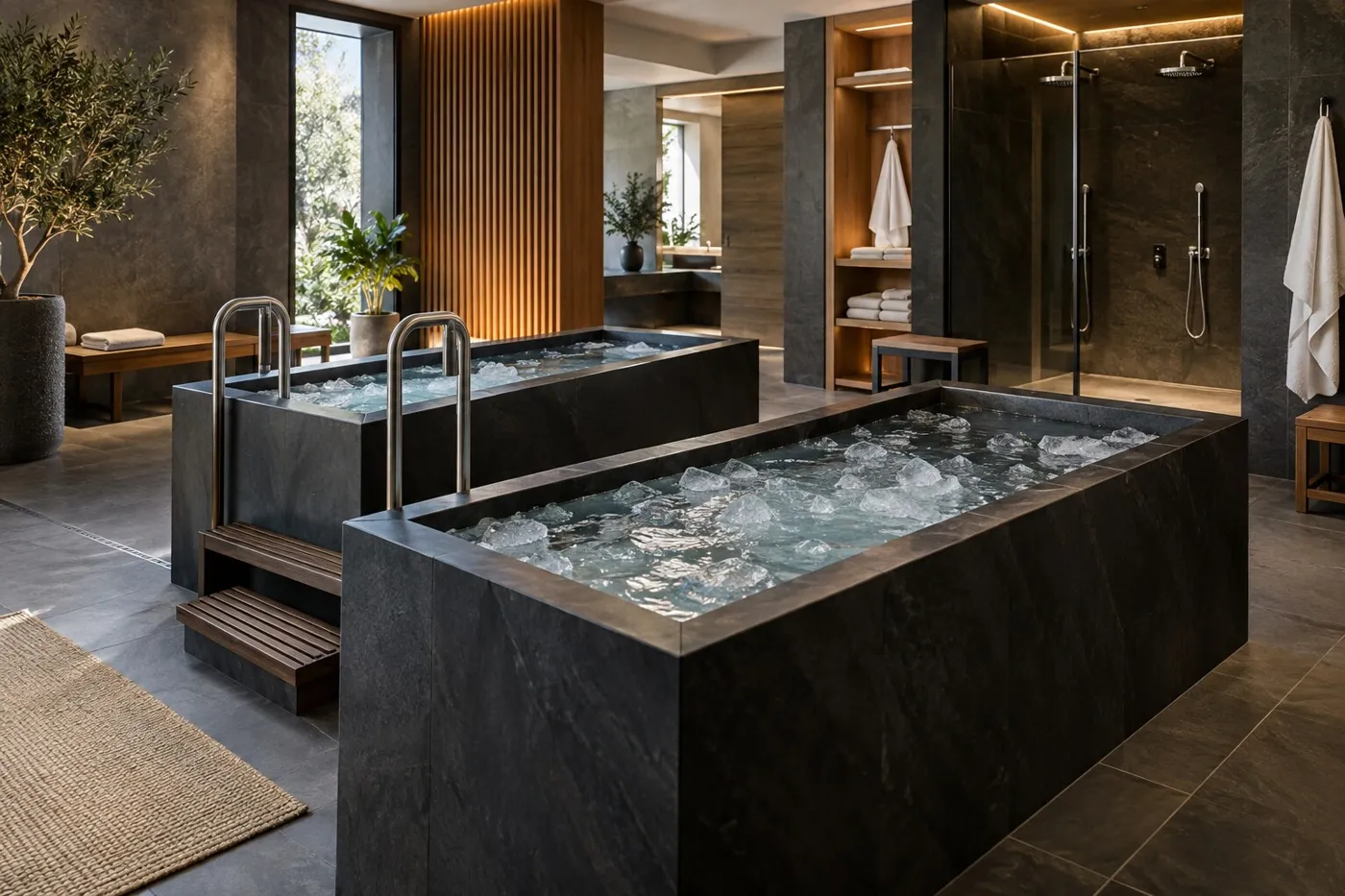
Concept visual of a calm cold-plunge suite with two stone ice baths.Concept visual
Concept visual, not an existing Plumeria facility.

What it is

A cold plunge is a bath of water below about 15°C that you sit in for a short time. Whole-body cryotherapy is different: two to four minutes standing in a chamber of very cold, dry air, below −100°C.

What it feels like

The plunge takes your breath away for the first few seconds. Controlling that breath is most of the skill. Afterwards most people describe feeling wide awake. Cryotherapy is intensely cold but dry, and over quickly.

What the evidence says

Research on cold water after exercise has mostly looked at muscle soreness; the studies are small and the results uncertain. For whole-body cryotherapy the evidence is very limited, and the ASA has said it has not seen convincing evidence for health claims. So we offer cold for how it feels, and because it is part of the routine Plumeria was built around.

How we plan to run it

The first seconds of cold cause a gasp reflex that can stress the heart, so anyone with a heart condition must get medical advice first. Short times, a guide nearby, and never alone. Cryotherapy equipment will be chosen only after testing, due diligence and compliance checks.

Sources
03

Recover

Lie back, switch off, reset.

Massage

Hands-on bodywork from qualified therapists, for after training, after a long week, or just because.

PEMF mats

What it is

PEMF stands for pulsed electromagnetic field. A PEMF mat has coils inside that produce gentle, pulsing magnetic fields while you lie on it. It is a powered device. It is not the same as a grounding (earthing) mat, which is covered below.

What it feels like

You lie down, usually for 10 to 30 minutes. Most people feel very little: at most a faint tingle or pulse. It is a lie-down-and-rest experience.

What the evidence says

Established medical use: prescription PEMF devices have been approved in the United States for decades to help some broken bones that have failed to heal. Even there, reviews call the evidence mixed.

For wellness mats, and for popular claims about sleep, inflammation or “cell energy”, the evidence is limited. The ASA has ruled against pain-relief claims for PEMF. We describe it as what it is: a quiet, restful session.

How we plan to run it

Not for anyone with a pacemaker or other implanted electronic device, or who is pregnant. Health question first, every time.

Sources

Grounding (earthing)

What it is

The idea of grounding is simple: direct skin contact with the earth, such as walking barefoot on grass or sand, or lying on a conductive mat that is connected to the earth. It is completely different from PEMF: nothing is generated or pulsed, it is a passive connection.

What it feels like

No sensation at all. The experience is really about the setting: slowing down, lying still, time away from screens.

What the evidence says

Honestly, very limited. The studies that exist are small, and much of the research has been funded by companies that sell grounding products. The ASA has ruled against grounding health claims. If we offer it, it will be as a calm, simple part of the space, nothing more.

How we plan to run it

Any mat connected to a building’s electrics relies on correct wiring, so any equipment will be professionally installed and checked.

Sources

Red-light therapy

What it is

Panels or beds that shine low-level red and near-infrared light on the skin. You will also hear it called photobiomodulation.

What it feels like

Warm, bright and relaxing. You stand or lie in front of the panels, usually for 10 to 20 minutes, with eye protection.

What the evidence says

Established medical use: low-level light is used in some cancer care to help with painful mouth sores caused by treatment, under clinical supervision.

For skin, recovery or mood, the evidence is limited, and in the UK any medical claim needs a registered medical device. We will not make those claims.

How we plan to run it

Eye protection provided, and a health question first for anyone with light sensitivity or on light-sensitising medication.

Sources

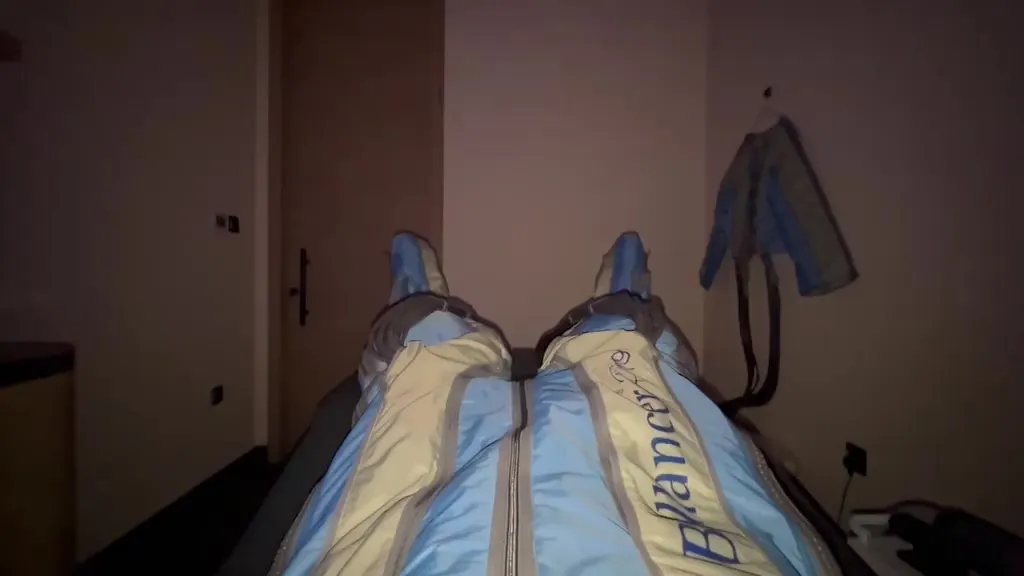
Compression boots

Bobby lying back with inflatable compression boots on both legs.
Bobby in compression boots during his research trip.

What it is

Sleeves that zip over your legs and inflate in sequence, squeezing gently from the feet upwards, then releasing.

What it feels like

A firm, rhythmic squeeze, a bit like a massage without hands. Most people lie back and switch off for 20 to 30 minutes.

What the evidence says

Research has mostly looked at how sore people feel after exercise, with inconsistent results; the evidence is limited. They are popular because they feel good.

How we plan to run it

Not for anyone with a blood clot, circulation problems or a recent leg injury without medical advice.

Sources
04

Oxygen & Clinical

Only ever with qualified professionals.

Hyperbaric oxygen chambers

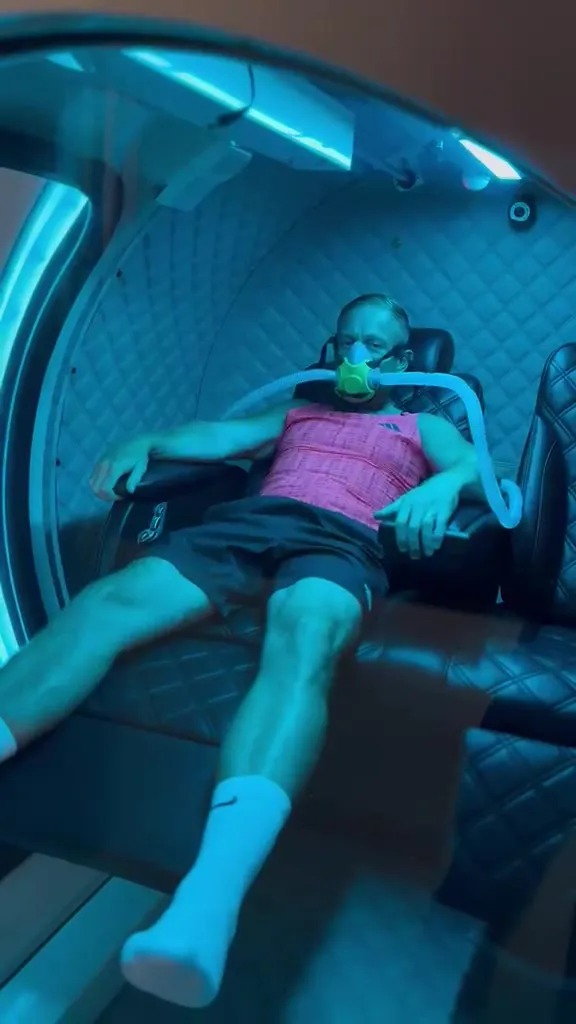
Bobby reclining inside a hyperbaric chamber wearing an oxygen mask.
Bobby inside a hyperbaric chamber in Dubai.

What it is

You sit or lie in a sealed chamber while the air pressure is raised above normal, and breathe oxygen through a mask or hood. The higher pressure means more oxygen dissolves into your blood. Chambers range from hard medical chambers at high pressure to softer “mild” chambers at lower pressure and lower oxygen levels. They are not the same thing.

What it feels like

A hiss as the chamber pressurises, and your ears pop as they do on a plane (you clear them by swallowing or yawning). Then you simply sit back and breathe normally.

What the evidence says

Established medical use: in hospitals, hyperbaric oxygen at high pressure is an established treatment for a small number of serious conditions. In England the NHS routinely funds it for decompression illness (the “bends”) and gas embolism. Specialist medical bodies list further uses, such as carbon monoxide poisoning, some radiation injuries and certain wounds that will not heal. These are hospital treatments under medical supervision.

Wellness and recovery use is different. Evidence for hyperbaric sessions as a wellness or recovery experience is limited, the UK’s advertising regulator has said it has yet to see convincing evidence, and the British Hyperbaric Association does not recommend mild chambers. We will not claim it does anything for your health.

How we plan to run it

This is the experience we are most careful about. Anything we offer will be decided with qualified professionals, with health screening first, strict fire safety around oxygen, and the right registration in place (hyperbaric treatment under a doctor is regulated by the CQC). If it cannot be done properly, we will not do it.

Sources

Wet cupping (hijama)

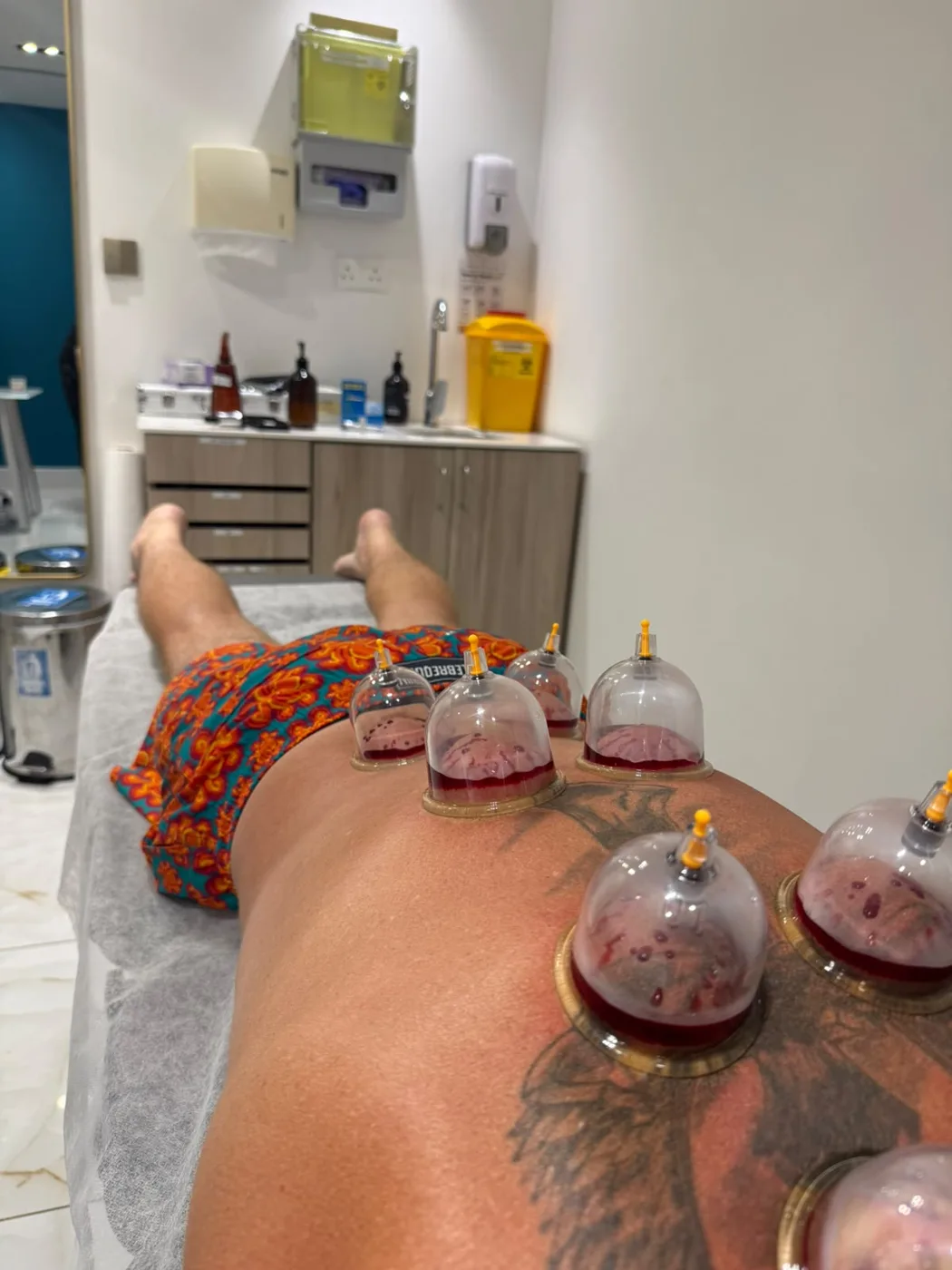
Bobby lying face down during a wet cupping session, with clear suction cups on his back.
Bobby’s own wet cupping session.

What it is

Cupping uses cups on the skin to create suction. In wet cupping, also called hijama, the practitioner makes small, shallow cuts in the skin first, so a little blood is drawn into the cups. It has been practised for centuries in many parts of the world.

What it feels like

A strong pulling sensation as the suction builds. The cuts are small and quick. The cups usually leave round marks that fade over several days.

What the evidence says

Research into cupping exists, but the evidence is not strong, and there are rare reports of side effects such as infection and, with repeated wet cupping, blood loss. Our founder found it worthwhile; we make no health claims for it.

How we plan to run it

Because it breaks the skin, wet cupping will only ever be done by trained practitioners with strict hygiene and single-use equipment, in a registered treatment room. We will confirm with Waverley Borough Council exactly what licensing applies. Not for anyone on blood thinners, with a bleeding disorder or anaemia, or who is pregnant; a health check comes first.

Sources

IV drips & blood testing

These are clinical services. They will only ever be offered by qualified clinicians, with proper screening, prescribing and registration in place, and never sold as a fix for anything.

05

Refuel

Keep it simple. Keep it clean.

The kitchen

Eight carefully sourced ingredients. Build a simple bowl. No junk, no extras.

Juices & hydration

Freshly pressed organic juice and the best electrolytes we find on our travels.

Wellness products

A small, chosen range to take home. See the food page →

Tell us what matters to you

Help shape Plumeria

Join the list and tick what you would use most. It genuinely helps decide what comes first.

General information, not medical advice. If you have a health condition, are pregnant or take regular medication, speak to your doctor before using heat, cold, pressure or electrical experiences. Images marked “concept visual” are not an existing Plumeria facility.